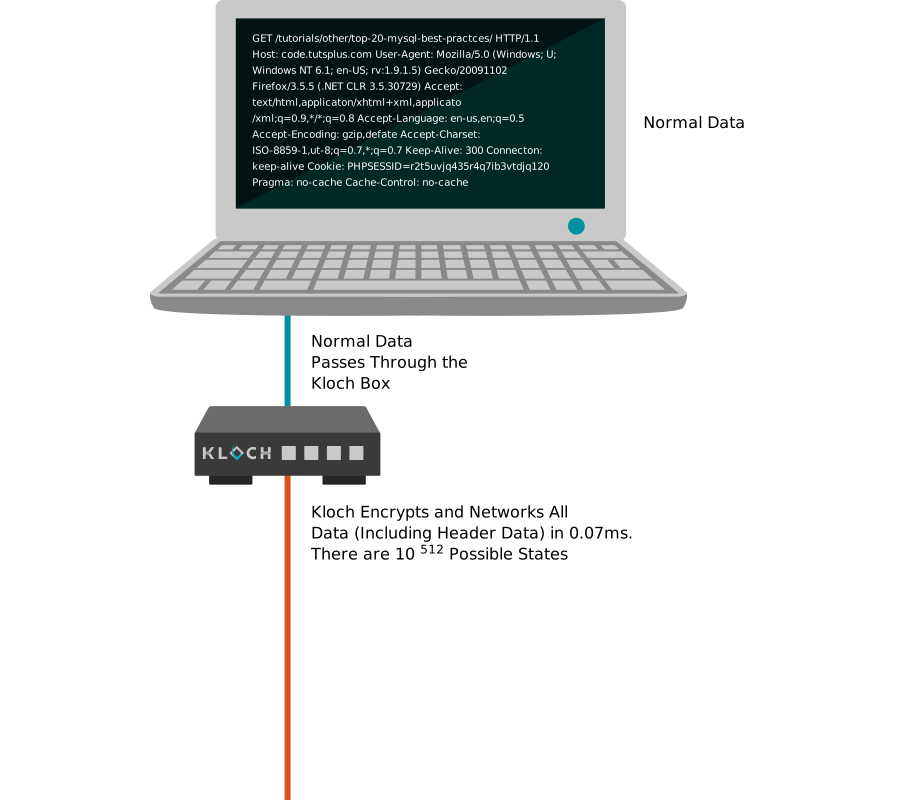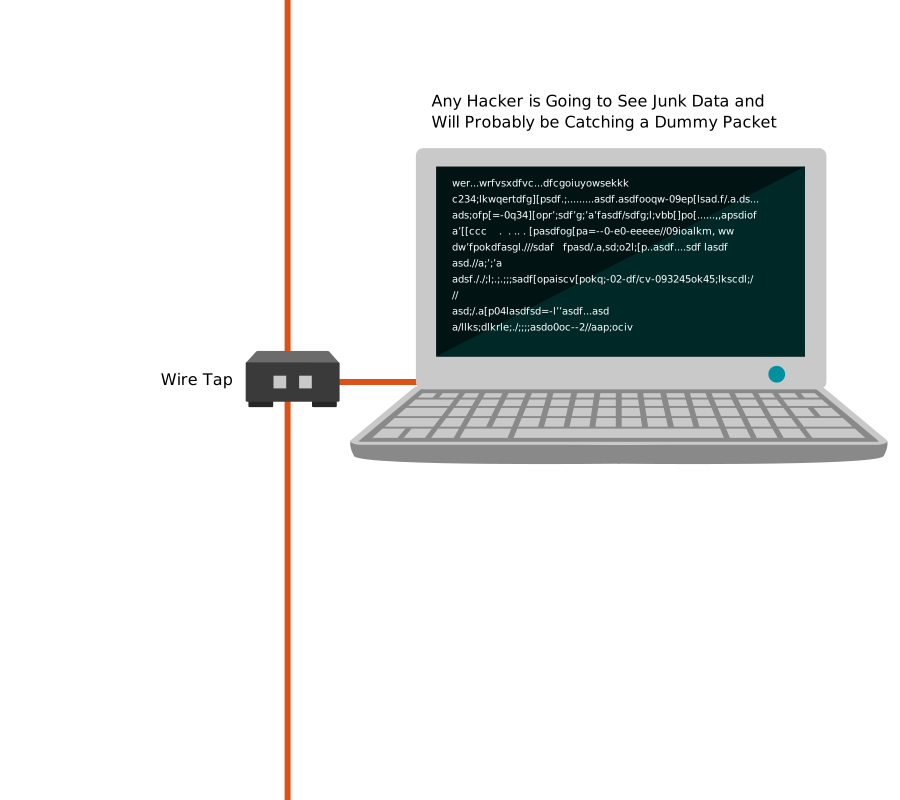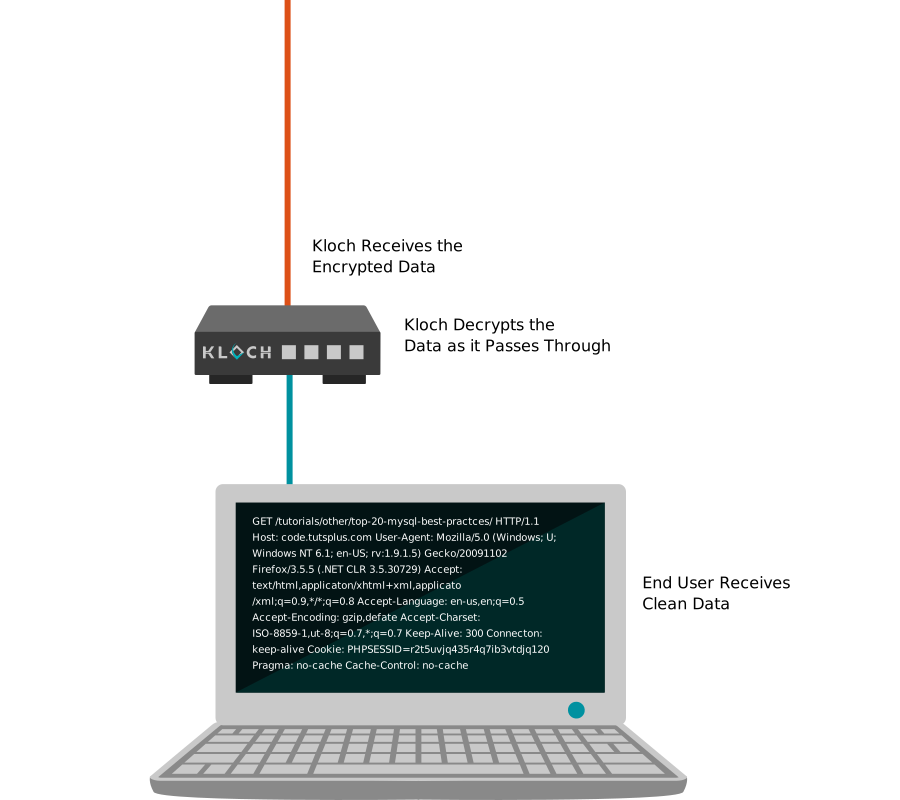

A hardware-based approach to securing data in motion across critical and industrial systems, designed to operate in real time without introducing operational complexity or latency.
KLOCH delivers FPGA-based, binary-level encryption using patented Variable Word Length (VWL) technology, designed for operational environments that require speed, reliability, and compatibility. It secures all TCP/IP and UDP traffic with ultra-low latency while integrating seamlessly into existing networks.
The non-algebraic VWL encryption model produces state complexity beyond AES-256, exceeding 10^512 possible states and reducing susceptibility to both classical and quantum-based cryptographic attacks.
1
Binary-level, non-algebraic encryption using patented Variable Word Length methods
2
Key management system that updates encryption keys without network exposure : no key data ever travels over the wire
3
FPGA-based implementation with no operating system
KLOCH is engineered for environments where timing and responsiveness are critical. Encryption, data encoding, and decryption are performed with an average latency less then 0.07 milliseconds, ensuring system responsiveness and operational safety.
This performance profile makes KLOCH suitable for critical infrastructure, industrial control systems, and safety-related applications that require immediate data transmission.
1
Full system latency of less
then 0.07 ms
2
No buffering or timing disruption
3
Maintains operational safety and efficiency
In addition to encrypting data in motion, KLOCH provides network obfuscation that limits visibility into network structure and critical assets. While operators retain full network visibility, external observers and adversaries are misled about topology and asset placement.
This reduces the effectiveness of reconnaissance and scanning tools and limits an attacker’s ability to navigate or escalate within a compromised environment.
1
Obscures network topology and critical assets from external tools
2
Reduces effectiveness of scanning, enumeration, and reconnaissance methods
3
Limits lateral movement, privilege escalation, and downtime while supporting NERC CIP and NIS2 compliance
KLOCH is designed for rapid deployment without disrupting existing operations. It integrates directly into current network architectures and protects data without requiring code changes, agents, or operating system modifications.
Designed for quick installation, and minimal configuration allows teams to deploy encryption quickly with limited training.
1
Plug and play deployment with no workflow or process changes
2
Both Ethernet & SFP ports
3
Compatible with legacy and modern systems, including PLCs, RTUs, HMIs, DCS platforms, network switches, sensors, and industrial controllers
KLOCH is built for true crypto agility to support the realities of the post quantum cryptography world. It is designed to operate with classical encryption methods and modern key encapsulation mechanisms.
By layering binary-level encryption with existing approaches, Kloch strengthens overall security without forcing architectural change or abandoning approved methods.
1
Operates alongside established encryption methods without replacing approved standards
2
Adds a binary-level protection layer that strengthens existing cryptographic deployments
3
Enables enhanced security without architectural changes or workflow disruption
KLOCH’s encryption architecture was designed to reduce reliance on algebraic structures and static cryptographic assumptions targeted by emerging quantum systems. By combining a non-algebraic Variable Word Length model with extremely high state complexity, the system limits the effectiveness of both classical brute-force and future quantum-based decryption techniques.
This makes KLOCH well suited for operational environments where encrypted data must remain secure over long system lifecycles.
1
Non-algebraic encryption model reduces reliance on structures targeted by quantum attacks
2
Extremely high state complexity, exceeding 10^512 possible states, limits brute-force viability
3
Designed for environments where encrypted data must remain secure over long operational lifecycles